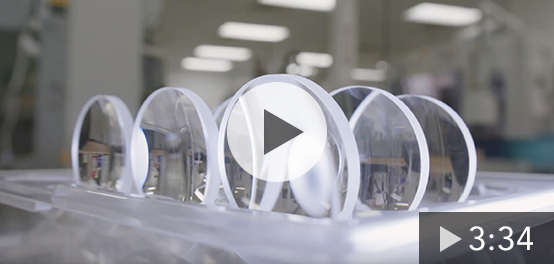
Learn how to navigate the many available options for shaping the irradiance profile and phase of laser beams to maximize your laser system's performance.
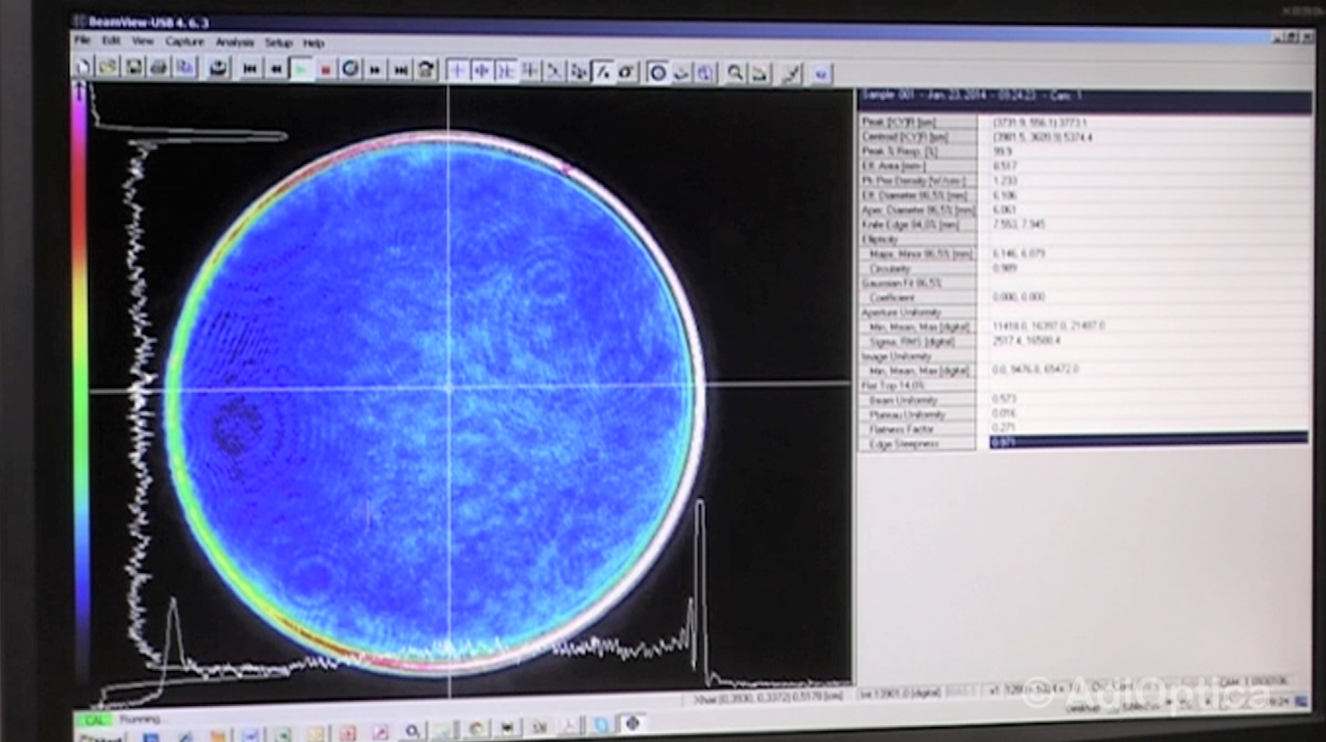
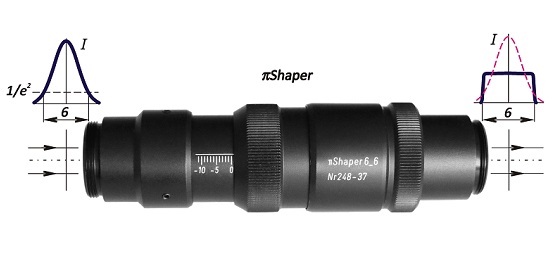
Learn how to align an AdlOptica πShaper from Edmund Optics, which converts input Gaussian laser beams to flat top profiles with nearly 100% efficiency.
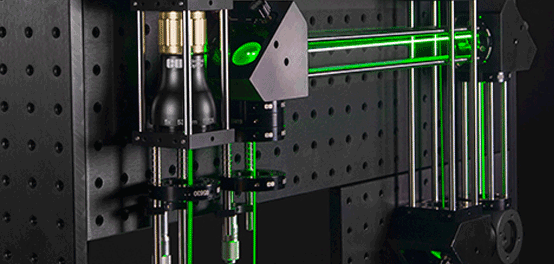
Learn how to build a laser-induced damage threshold (LIDT) testing station. The drive towards higher-power lasers makes this more important than ever before.
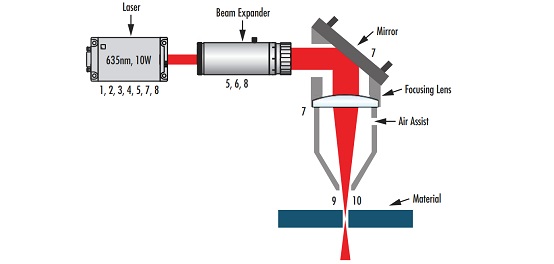
Learn the key parameters that must be considered to ensure you laser application is successful. Common terminology will be established for these parameters.
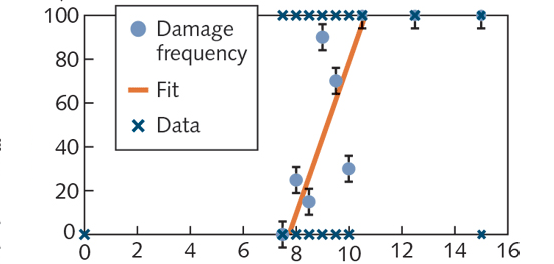
Testing laser induced damage threshold (LIDT) is not standardized, so understanding how your optics were tested is critical for predicting performance.
Laser Polarization: The Importance of Polarization in Laser Applications
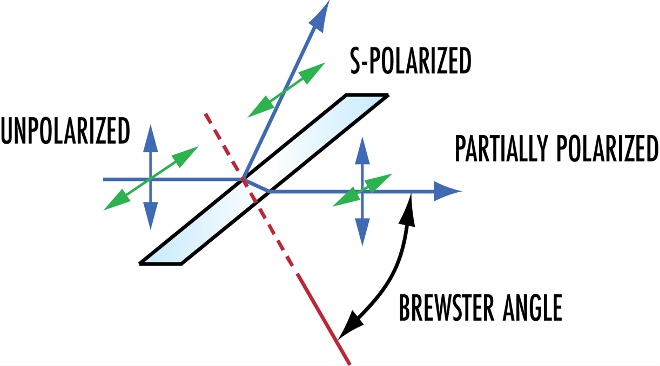
Understanding the polarization of laser light is critical for many applications, as polarization impacts reflectance, focusing the beam, and other key behaviors.
Laser Optics Lab:Specifications for Selecting a Laser
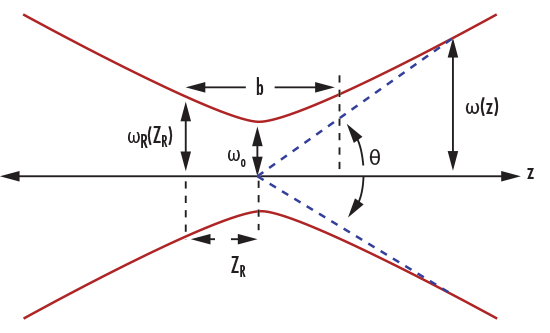
When determining which laser to use for your application, consider the following specifications: wavelength, coherence length, beam divergence, and Rayleigh range.
LIGHT TALK - EPISODE 4: Lasers & Optics with Kasia Sieluzycka and Nick Smith
Learn about trends in laser applications including increasing powers and decreasing pulse durations in this conversation with Kasia Sieluzycka and Nick Smith.
LIGHT TALK - EPISODE 8: Laser Magic! with Angi Compatangelo
From tattoo removal to diagnosing cancer, lasers can transform our lives in countless ways. Join our conversation about laser in skin care and diagnostics.
Edmund Optics' panel of laser optics experts discuss why the industry standard of measuring transmission to infer the reflectivity of high reflectivity laser mirrors doesn’t tell the whole story.
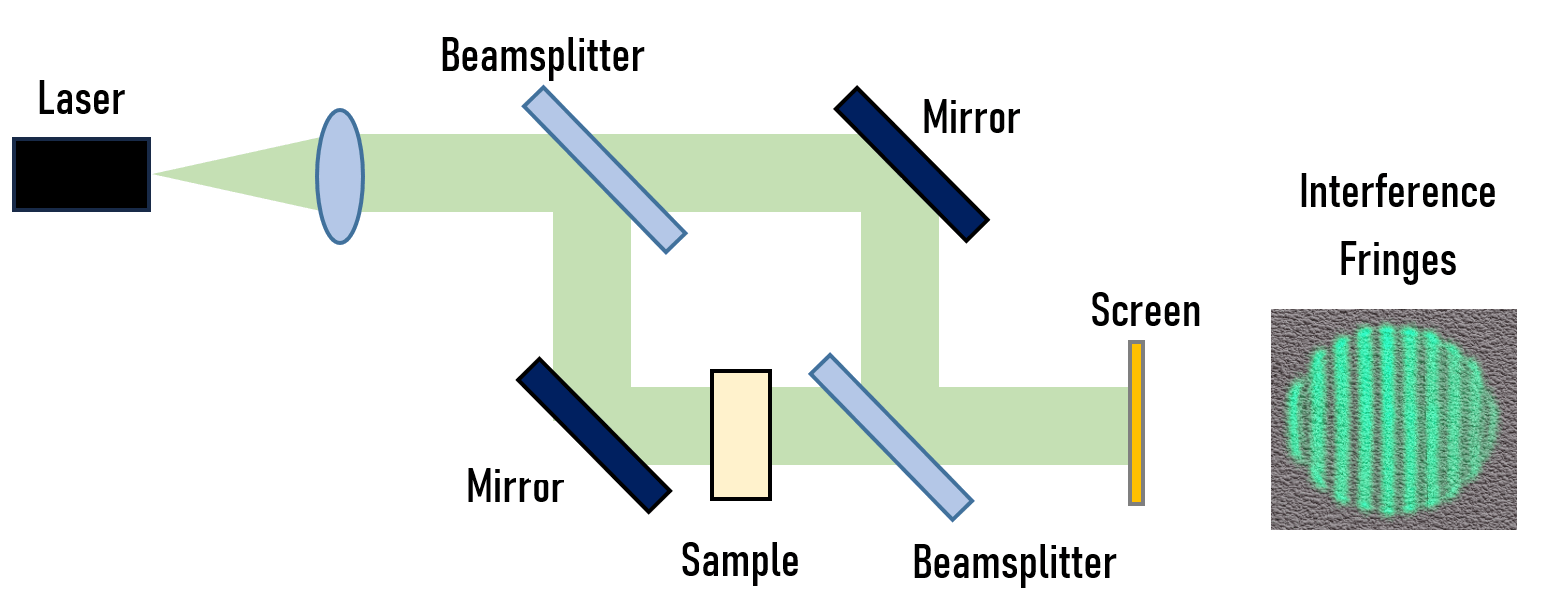
Learn how to assemble, align, and use a Mach-Zehnder Interferometer completely out of off-the-shelf products from Edmund Optics in this detailed guide.
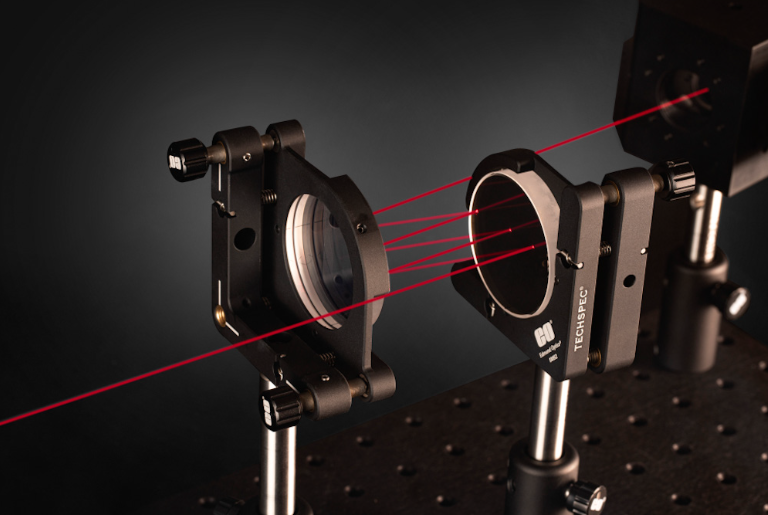
Check out these best practices for handling and storing high power laser mirrors to decrease the risk of damage and increase lifetimes at Edmund Optics.
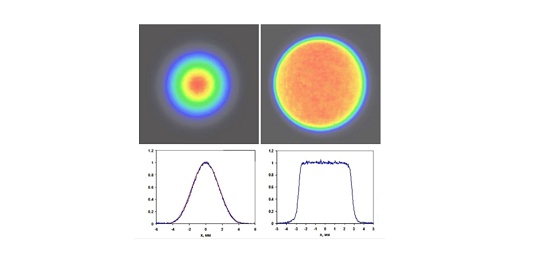
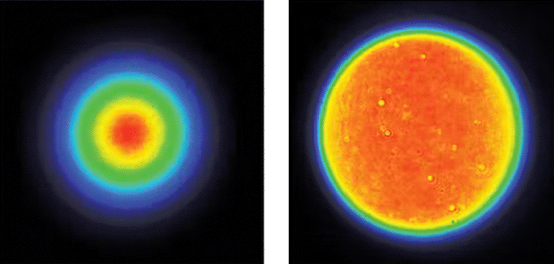
Converting a Gaussian laser beam profile into a flat top beam profile can have numerous benefits including minimized wasted energy and increased feature accuracy.
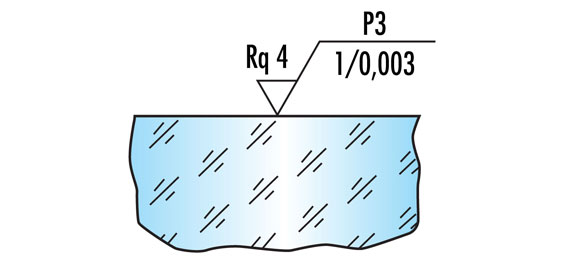
Surface roughness describes how a shape deviates from its ideal form. This is critical for controlling light scatter in laser devices and other optical systems.
Ultrafast highly-dispersive mirrors are critical for pulse compression and dispersion compensation in ultrafast laser applications, improving system performance.
Free-space optical (FSO) communications wirelessly transmit data through the air using lasers. FSO promises to revolutionize broadband internet access.
A Guide to (Not Over) Specifying Losses in Laser Optics
Overspecifying optical losses in laser systems will not further improve your performance or reliability, but it could cost you additional money and/or time.
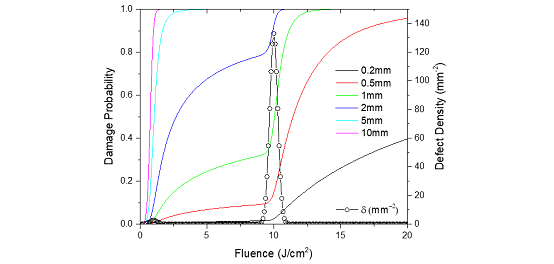
Laser induced damage threshold (LIDT) of optics is a statistical value influenced by defect density, the testing method, and fluctuations in the laser.
Not all optical components are tested for laser-induced damage threshold (LIDT) and testing methods differ, resulting in different types of LIDT specifications.