




XR | AR | MR
Extended Reality (XR), including Augmented Reality (AR) and Mixed Reality (MR), relies on integrated optical components to capture, manipulate, measure, and deliver light in compact, high-performance systems. From imaging and sensing to illumination, validation, and system integration, each element plays a critical role in overall device performance. Edmund Optics provides a comprehensive portfolio of solutions spanning lenses, filters, windows, light shaping, polarization, testing, and assembly materials, enabling engineers to efficiently design, prototype, and optimize next-generation immersive technologies.
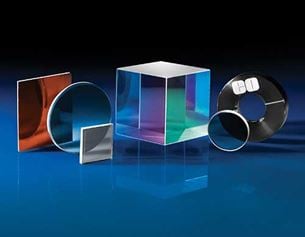
Polarization Optics
Polarization optics control the orientation of light’s electric field, providing powerful capabilities for a variety of applications. By using components such as polarizers and waveplates to manipulate and measure polarization states, these systems can enhance contrast, reduce glare, and reveal information not accessible through intensity or wavelength alone.
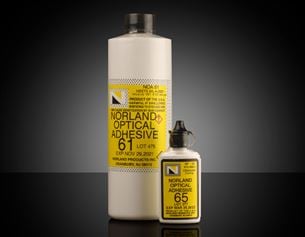
Optical Adhesives
Optical Adhesives are specialized materials used to bond and integrate optical components while maintaining high transmission and minimal distortion. Designed with controlled refractive indices, these adhesives reduce reflection losses and improve optical coupling between elements. In XR systems, optical adhesives are critical for assembling compact, high-performance devices, enabling stable alignment and efficient light transmission in applications such as sensor modules, display stacks, and waveguide integration.
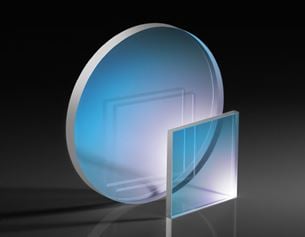
Specialty Windows
Low-Profile Optical Windows are designed to provide protection and high optical transmission in applications where size, weight, and thickness are critical constraints. Manufactured from durable materials such as chemically strengthened glass, these thin windows maintain optical performance while minimizing system footprint. In XR applications, low-profile windows are commonly used to protect cameras, sensors, and display elements, enabling compact, lightweight designs without compromising image quality or signal integrity.
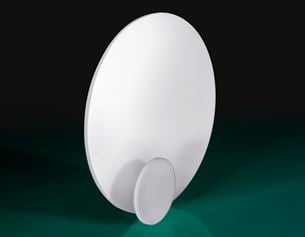
Optical Diffusers
Light Shaping & Diffusers are used to control and distribute illumination within optical systems, enabling uniform light output and minimizing intensity variations. By scattering and homogenizing light from sources such as LEDs and lasers, these components improve system performance and measurement accuracy. In XR applications, diffusers play a critical role in eye tracking, depth sensing, and display illumination, where consistent and controlled light distribution is essential.
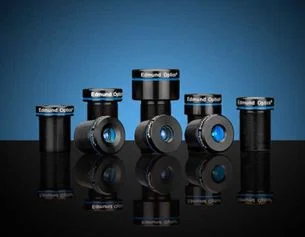
M12 Lenses (S-Mount Lenses)
Compact / Board-Level Lenses are designed to deliver high-quality imaging performance in extremely small form factors, making them ideal for space-constrained optical systems. Commonly available in formats such as M12 (S-Mount), these lenses support a wide range of sensor sizes and resolutions while maintaining low distortion and efficient light collection. Their compact design makes them well-suited for XR applications, including eye tracking, SLAM, and embedded vision, where size, weight, and integration flexibility are critical.
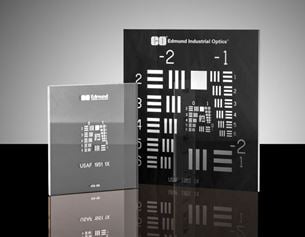
Test Targets
Optical Test & Measurement Targets are precision-engineered tools used to evaluate, calibrate, and optimize the performance of imaging and optical systems. Designed with highly accurate patterns and materials, these targets enable quantitative analysis of resolution, distortion, contrast, and color accuracy. In XR applications, they play a critical role in validating camera systems, aligning optical components, and ensuring consistent visual performance across sensing and display technologies.
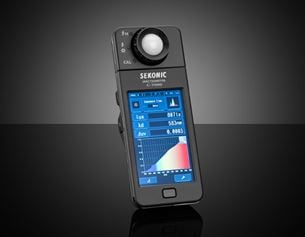
Testing and Detection
Testing & Detection solutions are used to evaluate, calibrate, and optimize the performance of optical and imaging systems. These technologies enable precise measurement of parameters such as intensity, spectral response, and image quality, supporting accurate system validation and integration. In XR applications, testing and detection tools are critical for characterizing camera performance, tuning illumination systems, and ensuring consistent visual quality in advanced sensing and display architectures.
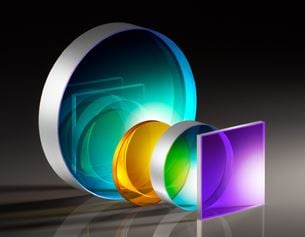
Diffractive Optical Elements (DOE)
Diffractive Optical Elements (DOE) are manufactured to have microstructure patterns that alter and control the phase of transmitted laser light. By altering the microstructure, a diffractive optical element can produce almost any beam intensity profile or beam shape to meet application requirements. These optical elements are manufactured from various substrates, including plastic, fused silica, germanium, sapphire, and zinc selenide (ZnSe), enabling their use with UV, visible, and infrared (IR) lasers. Diffractive Optics are generally designed for a specific laser wavelength, and their performance is wavelength-dependent.
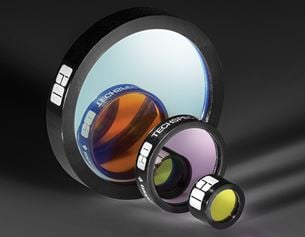
Traditional Coated 700 – 1650nm Bandpass Interference Filters
Infrared (NIR/SWIR) Filters are designed to selectively transmit or block specific wavelengths in the near-infrared and shortwave infrared spectrum, enabling precise control of light in imaging and sensing systems. By isolating desired spectral bands, these filters improve signal-to-noise ratio, reduce ambient light interference, and enhance detection accuracy. They are widely used in XR applications such as eye tracking, depth sensing, and biometric imaging, where reliable performance under varying lighting conditions is essential.
or view regional numbers
QUOTE TOOL
enter stock numbers to begin
Copyright 2023, Edmund Optics Inc., 101 East Gloucester Pike, Barrington, NJ 08007-1380 USA
California Consumer Privacy Acts (CCPA): Do Not Sell or Share My Personal Information
California Transparency in Supply Chains Act
This content may include material that has been generated or modified using artificial intelligence (AI).
The FUTURE Depends On Optics®